
BAYTOWN RESIDENTIAL ROOFING
Storm Damage Roof Repair in Baytown, TX
Storm damage roof repair in Baytown, TX needs an assessment of the damaged materials and the condition around them. Request a free SureClaim inspection to discuss missing shingles, debris impact, a new leak or a roof concern after severe weather.
Call SureClaim: (281) 691-0552Independent website. Enquiries go to Sure Claim Roofing LLC.
Report what changed after the storm
Start with observations you can describe safely. Are shingles missing from a slope? Is a tree or other debris against the roof? Did a stain appear inside after the weather passed? Those details help explain the concern without assuming every mark is storm damage or deciding the repair from a photograph alone.
Include the date you noticed the change and whether the roof had previous leaks or repairs. Older photographs or invoices may help distinguish a new issue from an existing one. The inspection still needs to evaluate the actual materials; a storm occurring near the time of a leak does not by itself establish the cause of every defect.
Baytown Quality Roofing is an independent referral website. Your enquiry goes to Sure Claim Roofing LLC, which confirms service fit, availability and any proposed work. The receiving provider’s assessment is separate from an insurer’s decisions about policy coverage or a claim.
Inspect safely before requesting closer assessment
NRCA’s storm guidance recommends assessing damage from the ground and leaving closer inspection and repairs to a professional roofer. Do not climb onto a roof to obtain a photograph or move debris. A picture from a safe indoor position or ground-level view can still explain where the concern is located.
If you already have photographs, keep the original files and note what each shows. Wide views can help identify the roof section, while closer images taken safely may show a visible change. You do not need to create an exhaustive damage report before asking for help. Share what you know and let the inspection establish what remains unknown.
An urgent enquiry should say clearly whether water is entering now. Call (281) 691-0552 to discuss availability. Sending a message does not reserve emergency attendance, and the ability to accept an online enquiry is not a promise of a crew at any hour.
Distinguish damaged shingles from disturbed seal bonds
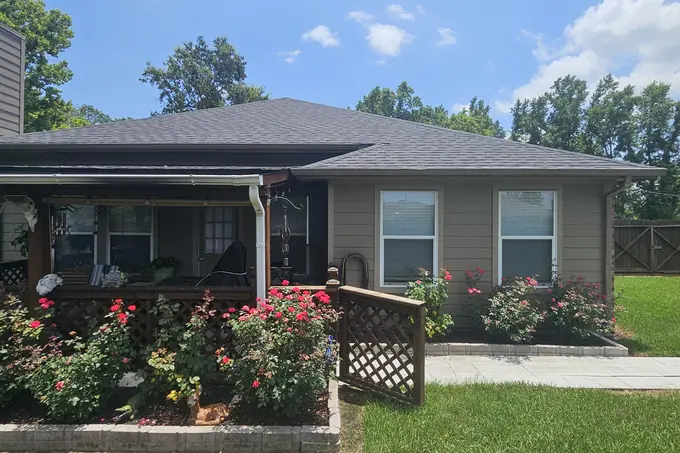
Wind-related concerns can involve shingles that are missing or damaged and surrounding shingles whose attachment or seal needs assessment. GAF’s storm-damage bulletin distinguishes replacement of damaged pieces from hand sealing of certain otherwise undamaged shingles with broken seal bonds. The correct action depends on the installed product and its condition.
That distinction matters when comparing repair descriptions. A proposal limited to replacing the visible missing piece should explain how neighboring material disturbed by wind or access will be handled. Simply putting a new shingle in an opening does not describe the entire repair process.
At the same time, a lifted appearance in a ground photograph is not enough to prescribe a particular repair. Ask for the inspection findings and the selected product’s repair requirements. You can request an inspection through SureClaim to discuss the affected shingles without treating a photograph as a remote diagnosis.
Temporary protection and permanent repair are different stages
Temporary water control can help protect an exposed area while a permanent scope is arranged. It does not establish that the roof has been fully restored, and it may need to be removed as part of the later work. Ask the provider what the proposed temporary measure addresses, what remains exposed or uncertain and what the follow-up plan will be.
GAF’s technical storm bulletin notes that attaching tarps by nailing through shingles can damage those shingles. This is one reason temporary protection belongs in the professional assessment and permanent repair discussion. Do not install a tarp yourself based on a general website description.
TWIA provides temporary-repair guidance to its own policyholders, including photographs and coordinating permanent repairs with inspection. If you have an insurance question, contact your insurer or agent about your circumstances. Neither a temporary measure nor a roofing estimate establishes whether a loss is covered.
Keep contractor findings separate from insurance outcomes
A roofer can describe roof condition, photograph visible damage and provide an estimate for the work proposed. Those records help you understand the building problem. They do not determine the insurer’s obligations or replace policy interpretation. Ask your insurer or a suitably qualified adviser about coverage, settlement or representation questions.
SureClaim’s recorded assistance includes documenting damage, providing a contractor’s roofing scope and attending an adjuster inspection when requested. This website does not promise claim approval, a particular settlement, waived deductibles or unchanged premiums. Do not choose a repair scope solely because a marketing claim suggests insurance will pay for it.
Keep a copy of the condition photographs, proposed work and any changes. If your insurer requests information, ask what specific technical detail is needed. You can request an inspection through SureClaim for contractor findings and a roofing scope. Insurance decisions remain separate.
Check repair permits and windstorm inspection timing
Within Baytown’s residential guidance, shingle-only replacement and roof deck work are treated differently. Deck installation, replacement or repair requires a permit, while shingle-only replacement appears in the city’s permit-exempt examples. The applicable authority and work scope must be confirmed for your address.
Windstorm certification can be a separate requirement. TDI’s designated-area information includes Chambers County and specified Harris County cities. TDI also describes a narrow inspection exemption for roof repairs below 100 square feet that do not involve decking. Do not apply that condition to a larger repair, decking work or every local permit question.
Where windstorm inspection is needed, planning before and during the work can matter. Discuss who confirms the requirements and coordinates the appropriate inspector. Our roof inspection service page explains the process questions; it does not establish a visitor’s eligibility or promise a certificate.
Organize observations by roof area and time
A useful storm record keeps the location of a visible change connected to when it was noticed. If you have several photographs, group them by the roof section they show. Explain whether each was taken before the storm, immediately afterward or following temporary work. This helps avoid treating images of different conditions as if they document the same point in the repair sequence.
Keep homeowner reports and contractor findings distinct. You may know that a drip began after a particular rain, while the roofer may identify a damaged component during inspection. Both pieces of information are useful, but they establish different things. Ask the written scope to describe the observed roof condition rather than convert every reported date into a confirmed technical cause.
If additional damage becomes visible after material is removed, preserve the connection between that finding and the proposed change. Ask which area was opened, what was found and why additional work is needed. This makes the permanent scope easier to understand without assuming a previously concealed condition should have been fully identified from the ground.
Keep these records for the roofing conversation even when no insurance claim is involved. They explain the project’s starting condition, approved work and any revised decisions. If you do have a claim, ask your insurer how to submit the information it needs; the contractor’s repair record does not replace that separate process.
Storm repair mechanics below the visible damage
Check adjoining roof components
Damage can occur where the covering meets a ridge, edge or penetration as well as in the middle of a slope. The proposed repair should identify which components are affected and which accessories are needed to reconnect the water-shedding surface. GAF’s bulletin specifically notes that starter and ridge products may be part of completing a repair.
Review the flashing connections
Flashing must integrate with the surrounding roof layers at walls, chimneys and penetrations. PNNL’s guidance emphasizes continuous water control and correctly lapped materials. Ask whether a visible storm defect explains the leak or whether adjoining transitions also need investigation.
Document any exposed decking damage
Once damaged materials are removed, the supporting deck may need a closer review. Ask how newly exposed damage will be recorded and how a changed scope will be approved. The need for decking work should be explained as a specific finding, not automatically assumed for every storm enquiry.
Choose the scope from findings, not the storm’s name
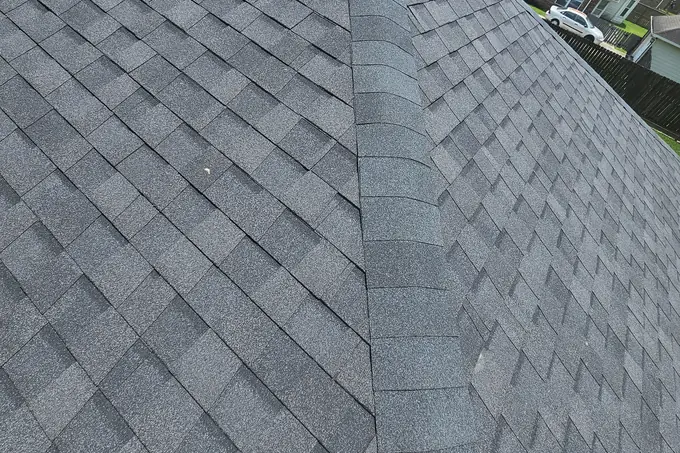
A storm repair may be limited to a defined area or may lead to a replacement discussion if the affected condition is broader. The decision should be explained through the damaged components, adjoining material and feasibility of restoring the system. The severity of a regional weather headline does not diagnose the roof at a particular address.
Ask for a proposal that states the repair area, included materials, related flashing or accessory work, disposal and any inspection responsibility. If replacement is recommended, ask why a localized repair would not adequately address the findings. Compare the actual scopes using our roof replacement service page.
To request an assessment, provide the property address, the visible change and whether there is an active leak. SureClaim will confirm the next step directly. For general roofing symptoms that may not be storm-related, our Baytown residential roof repair page provides the broader starting point.
BEFORE YOU DECIDE
Answered Questions
Do missing shingles prove the whole roof needs replacement?
No. They show a condition that needs assessment. The damaged area, adjoining materials and feasibility of a reliable repair determine the proposed scope.
Can the roofer guarantee my insurer will approve the repair?
No. Roofing findings and an estimate do not decide insurance coverage. Ask your insurer or qualified adviser about your policy and any claim.
Should I climb up to photograph possible storm damage?
NRCA recommends ground-level assessment and professional closer inspection. Share photographs only from locations you can safely access.
Is a temporary tarp the completed roof repair?
No. Temporary protection addresses immediate exposure. Ask what permanent repair and follow-up are needed and how the temporary materials will be handled.
A CLEAR NEXT STEP
Tell us what’s happening with your roof.
Request a no-obligation inspection from SureClaim. They’ll confirm the scope, options and availability with you.