
BAYTOWN RESIDENTIAL ROOFING
Roof Inspections in Baytown, TX
Roof inspections in Baytown, TX help establish what your roof needs before work is selected. Request a free, no-obligation SureClaim inspection for a leak, visible damage, a replacement question or an uncertain roof condition.
Call SureClaim: (281) 691-0552Independent website. Enquiries go to Sure Claim Roofing LLC.
Give the inspection a clear question to answer
You may want to find a leak source, understand storm-related changes or compare repair with replacement. State that purpose when you request the visit. It helps distinguish the immediate concern from other roof observations and gives you a basis for reviewing the findings.
An inspection is useful even when you do not know the component names. Describe the symptom in ordinary terms: a stain beside a wall, missing pieces seen from the yard or a leak that returned after prior work. Tell SureClaim about known repairs and when the problem started. Do not turn an uncertain observation into a firm diagnosis just to complete the form.
This is an independent enquiry website. Sure Claim Roofing LLC receives the request and confirms the inspection arrangements, access and service fit. Baytown Quality Roofing is not a separate inspection company or municipal certification office. A submitted request is not a confirmed appointment.
Prepare the information that makes findings easier to interpret
Have the property address and a callback number ready. If you know when the covering was installed or repaired, provide that history without guessing a date. Previous invoices can identify a product or roof section more reliably than memory. Photos from before the present issue can also give the provider useful context.
For a leak, describe the room, approximate location and conditions when moisture appears. If it happens only with certain weather, say that. If the mark is old and currently dry, say that too. An inspection needs to distinguish present evidence from the history reported by the homeowner.
Use photographs already available or taken safely from the ground or indoors. NRCA’s storm guidance favors ground-level observation and professional closer assessment. You do not need to climb on the roof to prepare for an inspection. You can request an inspection through SureClaim using the history and observations you can gather safely.
Ask about the covering and the connections around it
Visible shingles are only part of the roof’s water-control system. An assessment may need to consider roof-to-wall transitions, flashing at penetrations and the condition of materials adjoining a defect. PNNL’s guidance explains why penetrations such as vents and chimneys need properly integrated flashing rather than an isolated surface treatment.
Ask which areas were accessible and which could not be adequately assessed. Weather, roof condition and physical access can limit an inspection. A finished interior or concealed deck also restricts what can be seen. Discuss whether any further investigation would need separate agreement rather than assuming every hidden layer has been checked.
The useful output is an explanation of the observed condition and its limits. A statement that the roof looks fine or needs replacing is less helpful if you cannot see which findings support it. Ask for photographs and a description that distinguishes confirmed observations from possibilities requiring closer review.
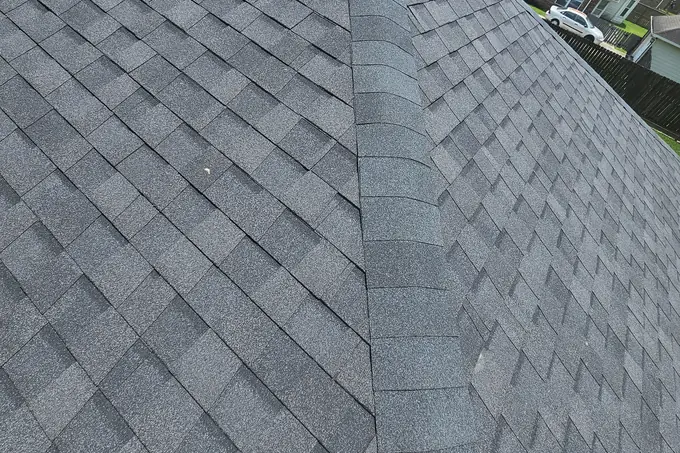
Understand what a roofing condition assessment can establish
Observed defects
Ask what was visible, where it was found and how it relates to your concern. A condition description should identify the relevant roof area rather than rely on a general label.
Repair options
Discuss whether a limited repair can reconnect sound surrounding material or whether wider removal is needed. Ask what the proposed work leaves in place.
Remaining questions
Concealed damage, uncertain leak paths or restricted access may require further investigation. Ask what remains unknown before treating a proposed repair as confirmed.
An inspection does not by itself guarantee that a roof cannot leak later. It describes the condition assessed under the available access and circumstances. Ask SureClaim what findings and records are included in the requested inspection and whether a separate specialized assessment is needed for your purpose.
Use the findings to compare repair and replacement
NRCA explains that a leak can result from a localized defect and does not automatically require complete replacement. Ask the inspector what makes repair feasible and what conditions would make it inadequate. If broader replacement is proposed, the explanation should identify the extent and nature of the problem.
A written repair scope can then be compared with a replacement scope. Which materials are changed? Which details are retained? How is hidden damage handled? Avoid comparing only the labels repair and replacement without understanding their boundaries. Our roof replacement service page lays out these questions.
You are asking for the reasoning behind the proposed work, not a predetermined result. A roof with a visible defect may need limited work; a less obvious roof can have issues that require investigation. Condition, access and the ability to restore the relevant assembly determine the next step more reliably than an assumed age rule.
A contractor inspection is different from a permit or windstorm certificate
A roofing condition assessment helps identify proposed work. A local building inspection or windstorm certification serves a separate purpose and can require a particular authority or inspector. Do not assume an ordinary free roofing inspection produces a permit approval, engineering opinion or WPI-8 certificate.
Baytown’s permit guidance distinguishes shingle-only replacement from deck installation, replacement or repair. TDI explains that the windstorm program depends on designated areas and applicable work. Where certification is needed, inspection while construction is underway can be important. These questions should be identified before the project sequence is fixed.
You can request an inspection through SureClaim to start the roof-condition conversation. Ask who confirms requirements for the specific address, who arranges any specialized inspection and what documentation you should receive. No inspection request on this site establishes insurance eligibility or promises approval.
Ask for findings that another decision can use
An inspection becomes more useful when its observations can be connected to a specific next decision. For a leak, ask which detail needs investigation or repair. For a replacement question, ask which condition makes the larger project relevant. For a storm concern, ask what was observed without assuming that the timing alone establishes a cause.
Request enough location detail to understand the finding later. A photograph of a defect is more helpful when you know which roof section it represents and how it relates to the proposed scope. If an area was inaccessible, keep that limitation alongside the findings rather than treating a report on one slope as a complete review of everything.
If you obtain another opinion, compare the questions each inspection answered and the areas each could access. Differences in recommendations may reflect differences in scope or remaining uncertainty. Ask for clarification before assuming that one short description and another detailed proposal are directly equivalent.
Finally, separate a condition report from the decision to hire for repairs. Receiving findings does not require you to approve an undefined project. Ask for the work, responsibilities and terms to be written clearly so you can decide what to authorize. The free, no-obligation inspection offer is a starting point for that discussion, with the actual arrangements confirmed by SureClaim.
Technical inspection topics: cover, interfaces and supporting deck
Covering condition and disturbed seals
GAF’s storm-repair guidance distinguishes damaged shingles from otherwise undamaged pieces with broken seal bonds. An assessment should consider the affected pieces and surrounding material that may need attention during repair. The selected product instructions matter; a general visual observation does not establish the proper treatment for every shingle.
Flashing and drainage connections
GAF’s flashing bulletin describes step flashing and counterflashing at roof-to-wall transitions. PNNL emphasizes flashing integrated with the roof’s water-control layers around penetrations. These references explain why an inspection should examine interfaces related to a leak rather than only count damaged shingles.
Concealed supporting materials
The deck lies below the roof covering and underlayment. Some condition can remain hidden until work opens the area. Ask whether visible evidence supports concern about decking and what cannot yet be confirmed. Do not assume a non-destructive roof visit rules out all concealed deterioration.
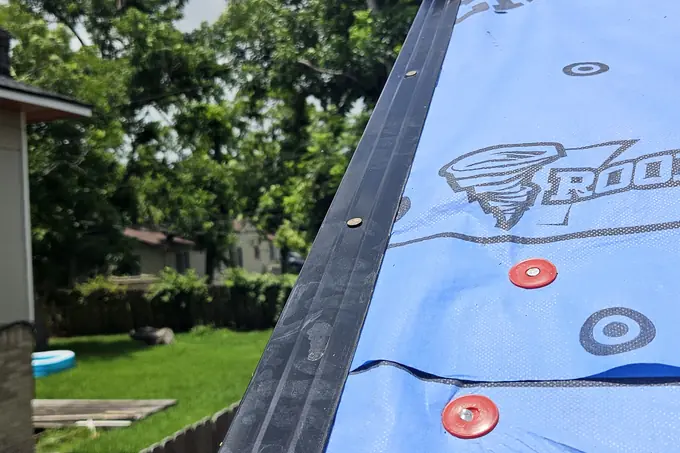
Leave the conversation with a defined next step
After reviewing the findings, ask whether the next step is a written repair estimate, additional investigation or a replacement proposal. Confirm which problem that next step addresses and whether a current leak needs a separate temporary measure. A good decision depends on knowing both the proposed action and what remains unresolved.
Keep photographs, the scope and any questions together. If you compare another proposal, give attention to the same roof areas and responsibilities. TDI’s homeowner guidance recommends written bids, agreements and warranty terms. Ask for the exact terms relevant to the proposed work rather than relying on an unspecified warranty promise.
To request the initial inspection, send the address, callback number and concern through the form or call (281) 691-0552. Provider hours are recorded as 8AM to 8PM daily; SureClaim confirms appointments directly. For a current leak, say whether water is entering now so the provider understands the request from the beginning.
BEFORE YOU DECIDE
Answered Questions
Is the roof inspection free?
SureClaim’s recorded offer is a free, no-obligation roof inspection. Confirm the arrangements and included assessment directly when scheduling.
Does a free roof inspection include a windstorm certificate?
Do not assume so. Condition assessment, local building inspection and windstorm certification are separate processes. Ask which specialized inspection the actual project needs.
Can an inspection rule out every concealed problem?
No. Hidden layers and inaccessible areas can limit what is established. Ask which parts were assessed and what remains uncertain.
What should I provide before the visit?
Give the address, callback number, symptom and known repair history. Safely taken photographs and previous roofing records can help explain the concern.
A CLEAR NEXT STEP
Tell us what’s happening with your roof.
Request a no-obligation inspection from SureClaim. They’ll confirm the scope, options and availability with you.