
RESIDENTIAL ROOFING ENQUIRIES
Roof Repair in Mont Belvieu, TX
Roof repair in Mont Belvieu, TX needs a defined repair scope and the right local project checks. Request a free SureClaim inspection for a leak, damaged covering or a question about whether limited repair is suitable.
Call SureClaim: (281) 691-0552Independent website. Enquiries go to Sure Claim Roofing LLC.
Begin with the roof condition and the Mont Belvieu address
Tell SureClaim what changed and when you noticed it. A leak near a wall, damaged shingles on one slope and a general replacement concern each call for a different inspection question. If water is actively entering, state that clearly so the provider understands the present condition.
Mont Belvieu is included in Sure Claim Roofing LLC’s recorded coverage. This website is an independent referring service, not a separate Mont Belvieu contractor branch. SureClaim receives your enquiry and confirms whether it can assess the property, what access is required and the scheduling arrangements.
Provide the full address early. Local project requirements should be checked for the actual location and work rather than inferred from a city label, subdivision name or a rule used in a nearby community.
Mont Belvieu publishes its own windstorm guidance; confirm the project’s permitting and inspection requirements before work is scheduled.
Ask the inspection to connect a defect to the repair
A useful assessment explains the likely source, affected components and proposed boundaries. An interior stain shows where water became visible; it does not by itself specify the exterior opening. Ask how the observed condition relates to the recommendation and what remains uncertain.
Roof covering, flashing and penetrations form connected water-control details. PNNL’s guidance explains why vents and other openings need flashing integrated with surrounding layers. That makes a leak investigation more than a search for one exposed crack to coat.
If the source cannot yet be established, discuss what additional investigation is needed before permanent repair is chosen. Our roof leak repair page explains the diagnosis questions. Share prior invoices and repair photographs if the same symptom has occurred before.
Make shingle and flashing work specific in the estimate
Ask which roof section is included and what material will be removed. A description that only says seal leak may not explain whether the underlying flashing or adjoining covering will be addressed. The estimate should identify the components relevant to the actual finding.
GAF’s flashing bulletin describes step flashing and counterflashing at roof-to-sidewall connections. Its storm-damage bulletin explains that surrounding shingles disturbed during repair may need hand sealing according to the applicable product guidance. These details show why the adjacent material and installed system matter.
You do not need to select a fastening detail yourself. Ask the provider to explain the repair in language that lets you understand what will change and what remains. If it involves a retained weathered surface, discuss appearance and compatibility without assuming a perfect match.
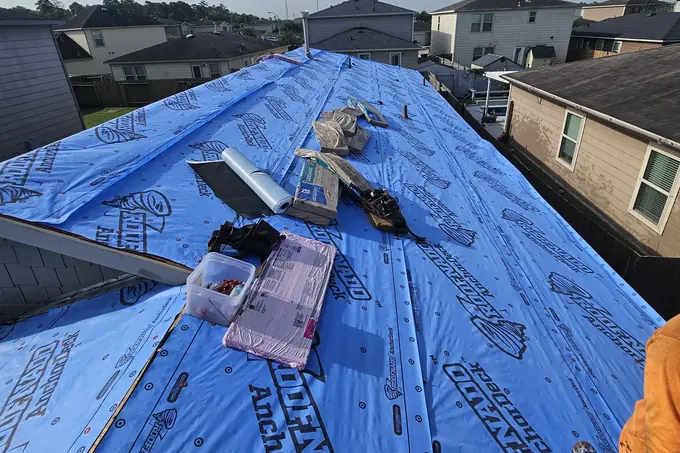
Consider repair before assuming a complete replacement
NRCA notes that roof leaks can come from isolated damage or loose flashing, so a new roof is not always required. The important question is whether the damaged area can be restored while connecting to suitable surrounding materials. The inspection must establish that condition for the property.
If replacement is proposed, ask what makes the repair option inadequate. Is the condition broader than first thought? Would access require wider removal? Which roof details need renewal? Compare the answers with the proposed replacement scope instead of relying on the word replacement to explain everything.
Our roof replacement service page helps organize the decision. A roof’s age can be background information, but it does not by itself diagnose a leak or identify the work needed.
Check decking findings before the repair becomes a wider project
The deck is below the roof covering and underlayment, so its condition may not be fully visible before removal. If damaged material is exposed, ask for photographs and an explanation of how it changes the work. Agree on the approval process for additional repairs instead of leaving the scope open-ended.
Decking involvement can also change inspection questions. TDI’s homeowner guidance describes a narrow windstorm inspection exemption for roof repairs below 100 square feet without decking. Do not apply that exemption to a repair that includes decking or use it as a blanket statement about city permit requirements.
When comparing estimates, ask whether known decking concerns are described separately from concealed conditions that have not been established. A clear written change process helps preserve the distinction between what was included originally and what the roofer discovers later.
Document storm observations without assuming an insurance outcome
If severe weather preceded the concern, keep safely taken photographs and note the timing. Describe what you saw rather than labeling every mark as wind or hail damage. The roof inspection needs to establish the building condition, while insurance coverage is determined through a separate process.
SureClaim’s recorded role includes visible-damage documentation and a contractor’s roofing scope. This site does not promise claim approval, deductible relief or settlement representation. Ask your insurer or qualified adviser about policy-specific questions.
For a defined storm concern, see storm damage roof repair. If urgent water entry is the immediate issue, call to discuss availability and clarify whether the first proposed measure is temporary protection or permanent work. Neither is booked merely by submitting the form.
Confirm inspection responsibilities alongside the work sequence
When the provider proposes work, ask which checks must happen before materials cover the repaired area. Where an applicable windstorm inspection is required, it should be part of project planning rather than a document assumed to appear after everything is finished. Confirm that responsibility directly with the appropriate participants.
A contractor’s condition assessment and an authority’s construction inspection answer different questions. The first helps establish what is wrong and what work is proposed. The second may be needed to verify compliance for the defined project. Neither should be silently substituted for the other.
Keep any inspection arrangement with the written scope and approved changes. If the amount of repair or decking involvement changes, ask whether the planned checks still match the work. This is a way to keep responsibilities clear, not a guarantee that a particular proposal qualifies for a certificate or insurance.
Mont Belvieu has its own windstorm guidance
The city’s Building Permits and Inspections page specifically addresses wind loads for construction, alterations, reroofing and repairs. It says these projects must resist wind loads in accordance with TWIA insurability requirements. It also describes WPI-8 certification for applicable work requiring TDI or appointed-engineer inspection to qualify for the TWIA program.
That is a local planning issue to raise before the work sequence is settled. Ask who will confirm the requirements for the address and proposed repair, and whether an inspection needs to occur while the relevant components are accessible. Do not substitute Baytown’s shingle-only permit example for Mont Belvieu’s own process.
This website does not issue certificates or decide whether an individual property qualifies for insurance. Our roof inspection service page explains the distinct roles and terminology. Your building office, appropriate inspector and insurer remain the sources for project-specific requirements.
Arrange an inspection and review the work in writing
Include the property address, callback number and main symptom in the enquiry. Mention access restrictions and prior work in the affected area. SureClaim can then confirm service fit and discuss an inspection. Its recorded provider hours are 8AM to 8PM daily, with appointments subject to direct confirmation.
Ask for the proposed materials, repair area, related details and any permit or specialist inspection responsibility in writing. Review how concealed damage, cleanup and completion records will be handled. Request the exact warranty terms relevant to the work rather than assuming all proposals have the same protection.
The free, no-obligation inspection request starts that conversation. For other nearby places, use the service-area hub; for the general residential repair approach, visit our Baytown roof repair overview. Each enquiry still needs its own address and condition assessment.
BEFORE YOU DECIDE
Answered Questions
Can I use Baytown’s shingle-only permit exemption in Mont Belvieu?
Do not assume it applies. Mont Belvieu has its own building and windstorm guidance. Confirm the actual address and proposed work with the responsible authority.
Does this request include a WPI-8 certificate?
No certificate is promised by an enquiry or ordinary condition assessment. Ask which certification process and inspector the actual project needs.
What if a small repair involves decking?
That can change the work and inspection questions. TDI’s listed small-roof-repair exemption specifies both less than 100 square feet and no decking.
Will a leak always lead to replacement?
No. A localized defect may be repairable. The provider needs to assess the affected and surrounding materials before explaining the proposed scope.
A CLEAR NEXT STEP
Tell us what’s happening with your roof.
Request a no-obligation inspection from SureClaim. They’ll confirm the scope, options and availability with you.