Roofing decisions, explained
Roof Repair or Replacement: What Should You Check?
Roof repair or replacement depends on the condition and extent of the failure, not the presence of a leak alone. An isolated defect may be repairable. A roof with broader deterioration needs a different assessment. Ask the contractor to show what failed, explain the surrounding condition and describe what each proposed option would leave unresolved.
Start with the problem the work must solve
A decision about repair or replacement is easier when it begins with a specific question: what is allowing water in or compromising the roof, and how far does that problem extend? A visible symptom can support several possible explanations. A stain after rain might involve a roof covering, a transition, a penetration or another source that needs investigation. The symptom alone cannot select the correct project.
NRCA's homeowner guidance explains that a leaking roof does not necessarily require complete replacement. Loose flashing or localized damage can be repairable. That is a useful limit on a sales recommendation, not a promise that every leaking roof can be fixed with a small patch. The surrounding material must also be suitable for the proposed repair.
Ask for the recommendation to be connected to photographs, observed conditions and a defined work area. If the explanation is simply that the roof is old or that replacement is always safer, ask what the inspection actually found. If a small repair is offered, ask whether the contractor believes it addresses the entry point or merely provides temporary protection.
What can make a focused roof repair a reasonable option?
A focused repair makes sense to investigate when the defect has an identifiable boundary and the surrounding roof can be integrated into the work. Examples can include a damaged component at a penetration, a roof-to-wall flashing problem or a limited area of damaged shingles. These are possibilities for assessment, not diagnoses based on a homeowner's description.
Repair quality depends on the connection to what remains. Flashing needs to work with the surrounding covering and water-control layers. Shingle repair can involve the seals and fasteners of adjoining shingles, not just the visibly damaged piece. Ask how the repair will meet sound surrounding material and whether any adjacent components must be opened or replaced to make that connection.
A useful written repair scope identifies the defect being addressed and any known concerns outside the work. That lets you distinguish a limited but appropriate project from a proposal that leaves the main problem unresolved. For a leak with an uncertain source, begin with roof leak diagnosis and repair rather than asking someone to price a guessed method.
What can move the conversation toward replacement?
Replacement is worth examining when the work needed extends beyond a practical localized correction. The assessment might find deterioration in multiple areas, repeated failures with no sound repair boundary, or underlying damage requiring a broader project. The contractor should explain the observed condition, rather than rely on the size of a stain or a generic roof-age rule.
Separate the covering from the supporting layers. Replacing shingles is not the same scope as replacing damaged decking or addressing a structural concern. If wood condition is uncertain until the roof is opened, ask how the estimate handles that uncertainty. A replacement proposal should describe what is included now and what would trigger additional work, with a way to document and approve changes.
Replacement also creates an opportunity to review connections and system components across the roof. Ask about flashings, underlayment, penetrations and any proposed ventilation work as parts of the written scope. Do not assume that the phrase new roof includes every component or resolves every moisture problem in the home. The actual assessment and proposal should explain the intended result.
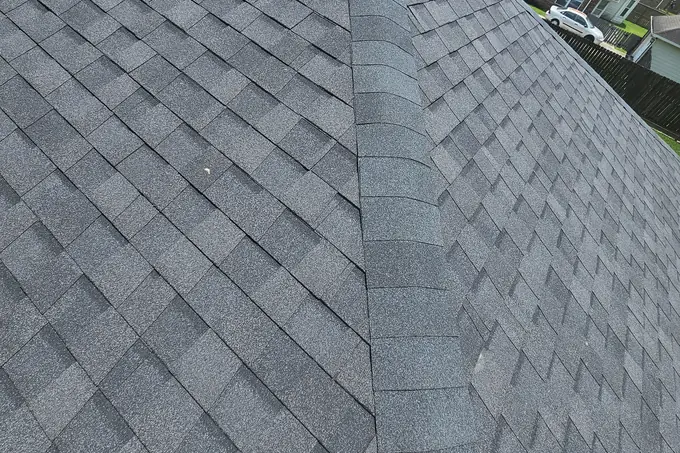
Use roof age and previous repairs as evidence, not a verdict
Approximate roof age helps a contractor understand the history, but it does not reveal the present condition of every material. If you have an installation invoice, product information or earlier repair photographs, share them. If the age is only an estimate, say so. An uncertain date should not become a precise remaining-life prediction.
Prior repairs matter because they describe what was attempted and whether the same symptom returned. A stain that reappeared after sealant was applied raises a different question from a new leak at another transition. Ask whether the latest proposal investigates the original failure, an adjoining interface or a different source. Repetition of the same patch without a clear diagnosis deserves an explanation.
Previous work also defines what should be inspected around the repair. Manufacturer instructions may require care when shingles are lifted or seals disturbed. A patch that appears neat from the ground can still leave unanswered questions about how water-control layers connect beneath it. Those questions call for an assessment, not a homeowner climbing onto the roof to prove a problem.
Compare what each option resolves and leaves in place
| Decision question | Repair proposal | Replacement proposal |
|---|---|---|
| What problem is addressed? | Names the defect and work boundary. | Explains why the wider roof needs work. |
| What remains? | Identifies surrounding materials and known exclusions. | Lists retained and replaced components. |
| What is uncertain? | Explains source or concealed-condition limits. | Explains decking discovery and change approval. |
| What paperwork applies? | Checks address and actual repair scope. | Checks permit and certification planning for the project. |
The aim is to compare outcomes and limitations, not only the totals. A repair can be the right smaller scope, or an incomplete response to a broader condition. A replacement can be justified by widespread problems, or unsupported by an explanation that never addresses the failed detail. The evidence should make the distinction understandable.
Ask what would be inspected at completion and what written product or workmanship terms apply. A repair and replacement can have different terms, and a manufacturer's material warranty is separate from the contractor's installation agreement. Do not treat a general lifetime phrase as an answer to either question.
Keep local paperwork and insurance separate from condition
For a property within Baytown's jurisdiction, the city distinguishes shingle-only replacement from roof deck work in its residential permit examples. Deck installation, replacement or repair is listed as permit-required work. That makes the scope important even if the project began as a small covering repair. Another city or an address outside the jurisdiction may have different requirements.
Windstorm certification is a separate question. The property's location, applicable program and work matter; a Baytown mailing address by itself is not an answer. If inspection is needed during construction, planning it after the work is concealed can create a different problem. Ask who will check the requirements before the chosen project starts.
Insurance does not select repair versus replacement merely because the homeowner requests one. A contractor can describe roof condition and estimate the work. Coverage, payment and policy questions belong with the insurer and appropriate licensed advisers. Do not choose a project on an assumed payout, waived deductible or promise that a particular scope must be approved.
Get an explanation you can use before committing
Prepare a short history of the symptom, previous work and known roof age. Ask the assessor to identify the observed failure, describe the surrounding condition and explain why a smaller or larger scope is appropriate. When proposals differ materially, request clarification using the same questions so the comparison is meaningful.
If a proposal leaves you unsure, ask for the uncertainty to be written down rather than replaced with a confident forecast. There may be information that cannot be established until materials are opened, but you should still understand how the decision and change process will work.
Baytown Quality Roofing refers enquiries to Sure Claim Roofing. Use the roof-condition inspection enquiry when you need the condition assessed, or the roof replacement enquiry when a broader project is already under consideration. An enquiry begins a conversation; it does not commit you to either outcome.
BEFORE YOU DECIDE
Answered Questions
Does one roof leak mean the roof has reached the end of its life?
No. A leak can arise from a localized defect such as damaged flashing. The decision depends on the source, affected materials and surrounding condition. An inspection should explain whether a defined repair is suitable or why wider work is needed.
Is repeated leaking always proof that replacement is necessary?
Repeated leaking is a reason to investigate the earlier diagnosis and repair, not automatic proof that the entire roof must be replaced. Ask whether the original entry point was corrected, whether adjoining details were inspected and whether the current symptom has another source.
Can I decide from roof age alone?
Roof age is useful history but does not establish current condition or an exact remaining life. Share known installation records and ask how the recommendation follows from the inspection. Treat an approximate date as approximate.
What should I ask if two contractors recommend different scopes?
Ask each to show the failure, define the proposed work and identify what would remain unresolved. Compare their evidence, exclusions, concealed-damage process and written terms. Different totals cannot be evaluated fairly until the scopes are understandable.
A CLEAR NEXT STEP
Tell us what’s happening with your roof.
Request a no-obligation inspection from SureClaim. They’ll confirm the scope, options and availability with you.