WHEN THE PATCH DID NOT SETTLE IT
Why Does a Roof Leak Keep Coming Back?
Recurring roof leaks can mean the original water-entry detail remains unresolved, adjoining materials need attention or a different entry route has developed. A fresh assessment should connect the symptoms and repair history to the roof’s actual water-control details before another patch is proposed.
Start with what changed after the previous repair
Tell the roofer what happened before and after the earlier work. Did the same stain become wet again, did water appear somewhere else, or did the problem return only under different rain conditions? Report observations without trying to choose the cause. A description of timing and location is more useful than a confident guess based on the stain alone.
Keep the old estimate, invoice and any photographs available. If you do not know which part of the roof was repaired, say so. Ask the new assessment to distinguish what can be confirmed from what the records merely suggest. A prior invoice is context, not proof that a particular detail is sound now.
Describe a repeat symptom without assigning blame
A returning leak does not by itself establish whether the earlier contractor missed a defect, repaired a different problem or encountered conditions that later changed. Ask for current evidence. The goal is a repair decision supported by the condition of the roof, rather than a dispute built on assumptions before the entry path is assessed.
Ask the inspection to trace the roof’s water-control interfaces
Roof penetrations and transitions need attention because the covering meets another material or object there. PNNL’s guidance on existing roof penetrations describes integrating flashing and sealing with the water-control layers at vents, flues, chimneys, skylights and other interruptions. The useful principle is continuity: the repair should explain how water drains past the detail.
A photograph of a ceiling mark cannot show all those connections. Ask what exterior and safely accessible evidence supports the proposed cause. The roofer may need to assess the surrounding area rather than focusing only on the point directly above the visible mark.
Separate the observed defect from the proposed correction
Ask for both statements: what condition was found and how the proposed repair addresses it. “There is old sealant here” describes an observation. It does not, on its own, explain which layers or transitions are allowing entry or which parts need to be restored. A sound scope connects those steps in plain language.
Look beyond another visible bead of sealant
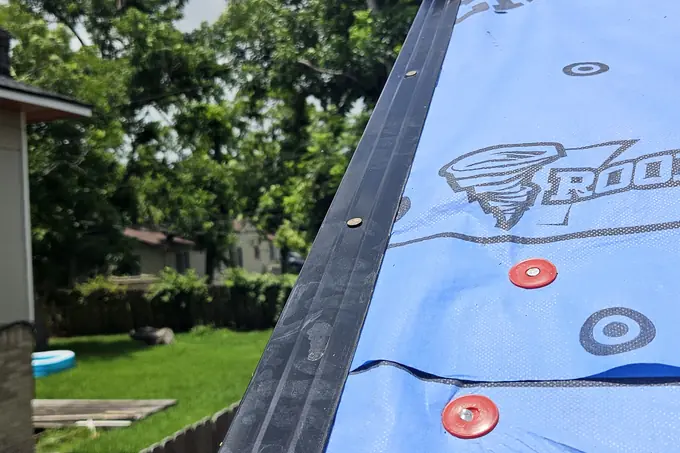
Sealant is part of some product-specific details, but adding material to a visible surface is not an explanation of the whole roof interface. Ask whether the proposed repair addresses the underlying arrangement, surrounding material and drainage path. Have the contractor explain when replacement of a component is proposed instead of further surface treatment.
GAF’s flashing bulletin discusses step flashing and counterflashing at roof-to-wall transitions. These are details where adjoining layers and overlaps matter. The example illustrates why opening a limited area may be necessary to assess a recurring problem; it is not a claim that every returning leak comes from a wall or chimney.
Ask what is unknown until material is opened
If the roofer cannot confirm a concealed condition during the initial visit, ask how further investigation will be scoped and approved. A limited investigation can be a decision step rather than permission for an undefined replacement. Clarify what evidence you should receive and who authorizes the next stage.
Review adjacent shingles and earlier repair boundaries
A localized repair changes a specific area, but the new work still has to meet the retained roof. Ask what was checked around that boundary. If the installed covering has been disturbed, ask which product instructions apply to its repair and whether surrounding pieces remain suitable.
GAF’s storm-repair bulletin notes that disturbed or broken shingle bonds can need hand sealing under the applicable guidance. Do not assume every lifted piece will simply reseal on its own. The roofer should explain the method appropriate to the installed product and current condition rather than borrowing a universal repair recipe.
Use the old scope to frame the new inspection
If the earlier work addressed one penetration, ask whether the new inspection is assessing that penetration, the adjacent covering and any nearby transitions relevant to the symptom. If it addressed a small shingle section, ask how the retained material limits or supports another local repair. Those questions make the comparison concrete without telling the contractor what the answer must be.
Decide between another repair and a broader roof scope
A recurring leak is a reason to investigate, not an automatic instruction to replace the entire roof. NRCA homeowner guidance recognizes that isolated damage or flashing problems can be repairable. Ask whether the observed condition remains confined to a detail or whether the contractor found broader limitations that change the recommendation.
For a proposed local repair, ask what makes the surrounding roof suitable to remain and how the repair ties into it. For a replacement recommendation, ask which observed conditions support that larger scope and what it will address that another localized repair would leave unresolved.
| Assessment question | What the answer should explain |
|---|---|
| Where is water entering? | The evidence for the suspected detail, including uncertainty. |
| What did the previous repair cover? | The documented boundary and its relation to this symptom. |
| Can nearby materials remain? | The condition supporting a limited repair or broader work. |
| What happens if opening reveals more? | Photographs, further scope and owner approval. |
Document the next repair and how concerns will be reported
Before approving work, ask for a written scope that describes the identified issue, included components and any limits to the assessment. Keep the before-and-after photographs the contractor provides with the project record. If the interior finish will be addressed separately, clarify that boundary rather than assuming it is part of the roofing agreement.
Ask how to report a concern after completion and which written terms apply. No inspection can promise the absence of every possible future leak, and this website does not supply a repair guarantee. A clear record still matters because it makes a later conversation specific: the location, symptom, timing and work already completed can be compared.
Report a new observation safely
If water returns, note when and where you observed it and take photographs from a safe location. Do not climb onto a wet roof or disturb the completed work to test your own theory. Contact the responsible provider and explain the current symptom before arranging another intervention.
Request a leak assessment with the repair history attached
A useful enquiry can be short: the same bedroom stain became wet during the latest rain, a prior repair was made near a wall transition, and the invoice and photographs are available. If the work location is unknown, say that instead. Do not delay making an enquiry because you cannot name every roof component.
Request roof leak repair assessment through SureClaim Roofing and mention that the problem has returned. If the entry point remains uncertain, ask for an inspection of the roof concern. SureClaim confirms the assessment arrangements, service scope and availability directly.
Baytown Quality Roofing is an independent enquiry website. This guide explains the questions a repeat problem raises; it does not diagnose your roof remotely or promise that a particular repair method will solve it.
BEFORE YOU DECIDE
Answered Questions
Does a returning roof leak mean the whole roof needs replacing?
No. It calls for a fresh assessment of the entry path, previous repair and surrounding condition. The evidence may support a local repair or a broader scope.
Why can the same ceiling stain appear again?
The underlying entry route may still need attention, or the symptom may have another source. Ask the roofer to connect current evidence to the proposed correction rather than identifying the cause from the stain alone.
Should I ask for more sealant over the old patch?
Ask for a diagnosis and a defined repair scope first. The appropriate work depends on the installed components and condition, not on a universal surface-patch method.
What should I send with a recurring-leak enquiry?
Provide the location and timing of the symptom, safe photographs, prior repair date if known and any scope, invoice or photographs from that work.
A CLEAR NEXT STEP
Tell us what’s happening with your roof.
Request a no-obligation inspection from SureClaim. They’ll confirm the scope, options and availability with you.