Roofing decisions, explained
Missing Roof Shingles: What Needs Checking?
Missing roof shingles need a professional assessment of the exposed area, the surrounding shingles and the layers beneath them. Replacing only the pieces you can see from the ground may leave other affected details unresolved. Take photographs from a safe location and request an assessment, particularly if water is entering the home.
A missing shingle is an opening question about the roof system
Shingles form the visible roof covering, but they work with underlying layers, fasteners, flashings and adjoining components. When covering is missing, the relevant question is not only how many pieces need replacing. It is what remains exposed, what else moved or was disturbed and how a repair can connect to the surrounding roof.
A ground-level photograph can show a conspicuous bare area, but it cannot establish the condition of every nearby seal or the decking below. Shingles lying in a yard are useful evidence to describe, not a reliable count of the roof's affected area. Do not climb onto the roof to inventory the damage yourself.
The first enquiry should distinguish visible missing material from indoor water entry. If both are present, say so. If there are missing shingles but no known leak, an assessment is still appropriate; the absence of a ceiling stain does not establish that all water-control layers are undamaged. The contractor should evaluate the actual conditions rather than promise an outcome from a photograph.
Why adjoining shingle seals matter
Many asphalt shingles use adhesive seal areas that help connect overlapping shingles. Damage assessment can involve the condition of those connections as well as torn or missing material. GAF's bulletin on storm-damaged shingles distinguishes damaged shingles from otherwise undamaged shingles with broken bonds. The appropriate action depends on the condition and the applicable product instructions.
The same issue can arise during repair. Lifting surrounding shingles to reach fasteners or replace material may disturb existing seals. GAF explains that affected shingles can require hand sealing, meaning adhesive is applied according to the relevant instructions rather than assuming the bond will restore itself. A proper scope should consider the neighboring material touched by the work.
This is not a reason to prescribe a particular adhesive or technique from a website. Products and assemblies differ, and the installed material must be identified where possible. Ask the contractor how adjoining shingles will be handled and what manufacturer instructions apply. The answer should explain the connection, not simply add a technical phrase to an estimate.
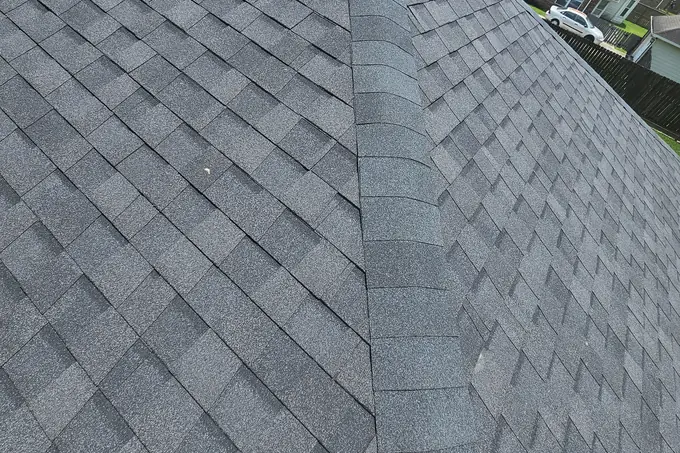
Different roof areas can need different components
Roof edges and the first course
The lower roof edge is not always repaired by replacing an ordinary field shingle. Starter materials and the first courses form part of the edge detail. If damage is near an eave or rake, ask whether the estimate includes the appropriate edge components and the adjoining covering. The contractor should explain the actual assembly rather than assume every visible piece performs the same job.
Ridges and other transitions
Ridge accessories can form part of a storm-repair scope, as GAF's bulletin notes. Material at the peak is arranged differently from the field covering below it. If the missing material is near a ridge, describe the location without assuming that a standard replacement shingle is the correct component.
Flashing at walls, pipes and chimneys introduces another connection. A missing or displaced shingle beside a penetration may require inspection of the flashing and the way it integrates with the surrounding covering. Repair should address the failed detail; it should not automatically expand into unrelated components, but neither should it ignore an affected junction.
What the assessor should establish before proposing repair
Ask which materials are damaged, whether the surrounding roof is suitable for a focused repair and whether underlying layers can be evaluated before work starts. The answer may be clear for some conditions and limited for others. A written scope should identify both the observed findings and any concealed condition that could change the work.
Compatibility is another practical question. The proposed material and accessories need to suit the existing roof and applicable instructions. Appearance also deserves a separate discussion: a compatible repair is not a promise of an invisible color match on an existing roof. Ask what product is proposed and what the homeowner should expect, without treating a visual match as proof of weather performance.
If a contractor recommends replacement instead of repair, ask why. The explanation should address surrounding condition, the extent of failure or another observed limitation of repair. NRCA notes that a leak does not automatically require replacement; likewise, one visible missing area does not establish the condition of the whole roof. The inspection, not a generic rule, should support the project.
Temporary protection and permanent repair are different decisions
When water entry is active or covering is exposed, temporary protection may be discussed before the permanent work. Its purpose and limitations should be explained. A temporary measure does not by itself establish the condition of the roof or complete the permanent repair, and weather or access can limit what is appropriate at a particular time.
Do not install a tarp or fasteners on the roof as a homeowner inspection exercise. GAF's repair bulletin notes that nailing tarps through shingles can damage them. A professional needs to consider both immediate protection and the consequences for the materials beneath it. Describe the problem and ask what response is available rather than attempting an exposed-roof task for a better photograph.
Use urgent roofing enquiry if the situation needs prompt assessment, and state clearly whether water is entering now. The receiving provider must confirm availability; a form that accepts enquiries at any hour is not a promise of an immediate crew. Permanent scope and applicable paperwork remain separate questions.
Keep storm records without deciding the insurance outcome
If you noticed the missing shingles after a storm, record the date, safe photographs and any temporary work. Keep invoices and the contractor's written findings. These records can help explain the condition and the work performed. They do not prove a covered loss or determine what an insurer will pay.
TWIA provides its policyholders with guidance on photographs, temporary repairs and coordination before permanent work. That is carrier-specific guidance, not an instruction that applies identically to every policy. Contact your insurer about your own obligations and questions. The contractor's role is to describe the roof condition and proposed roofing scope within its appropriate role.
Do not treat a promise of insurance-funded replacement as a substitute for diagnosis. You still need to understand what failed, why the proposed scope addresses it and what costs or paperwork are your responsibility. An estimate, a certificate and a coverage decision are different documents serving different purposes.
What to include when asking about missing shingles
Send the property address, the roof area involved and photographs taken safely from the ground. Explain when you noticed the change, whether material was found below the roof and whether there are indoor symptoms. If the roof has been repaired or replaced before and you have product or project records, include the relevant details.
Useful questions for the visit are: what components are affected, what adjacent shingles must be disturbed, how will the repair connect to sound material and what could change the scope after opening? Those questions focus the conversation on the work that matters rather than a guessed count of replacement pieces.
Baytown Quality Roofing refers residential enquiries to Sure Claim Roofing. Request storm-damage roof assessment for weather-related changes or roof leak repair assessment when the main concern is water entry. The enquiry does not confirm a diagnosis, an appointment or an insurance outcome.
BEFORE YOU DECIDE
Answered Questions
Are loose shingles in the yard enough to measure the repair?
No. They show that material was found, but they do not establish which roof area it came from or whether surrounding material and seals are affected. Share safe photographs and let the assessor define the repair boundary.
Will the surrounding shingles automatically seal again after repair?
Do not assume that they will. GAF guidance explains that shingles whose seals are disturbed can need hand sealing according to the relevant instructions. Ask how the contractor will handle the existing material and the product being used.
Can missing ridge shingles be treated the same as field shingles?
The ridge can involve different accessories and installation details from the main roof surface. Describe where the missing material is located and ask which components the proposal includes. The installed system and applicable instructions should guide the repair.
Does missing material mean I should request full replacement?
Request an assessment rather than choosing the scope from the visible gap alone. A focused repair may be possible if the surrounding roof supports it. A broader recommendation should explain the extent of damage or deterioration that makes repair unsuitable.
A CLEAR NEXT STEP
Tell us what’s happening with your roof.
Request a no-obligation inspection from SureClaim. They’ll confirm the scope, options and availability with you.