READ THE SCOPE FIRST
How to Compare Roofing Estimates
Compare roofing estimates by matching the proposed work, materials, exclusions and responsibilities before comparing totals. Two proposals for the same house can describe different repair boundaries, different roof components and different assumptions about concealed damage.
Make sure each roofing estimate addresses the same problem
Start with the condition the contractor is trying to correct. Ask where the defect was observed, what evidence supports that conclusion and how the proposed work reaches it. A sentence saying “repair roof leak” does not explain whether the work concerns shingles, a wall transition, a penetration or a combination of details.
Keep the original symptom separate from the proposed cause. You can reliably report that a ceiling stain appeared after rain. The roofer should explain why the proposed work addresses the entry route. If one estimate recommends a limited repair and another recommends replacement, ask each contractor to explain the condition that makes that scope appropriate.
Define the boundary of the work
Ask for a description or marked photograph showing the slope, section or detail being addressed. For replacement, ask which roof areas and attached structures are included. A garage, porch roof or lower slope should not be assumed part of a proposal simply because it appears in a measurement image. Get an answer that can be compared across the estimates.
Compare the roof components as well as the shingles
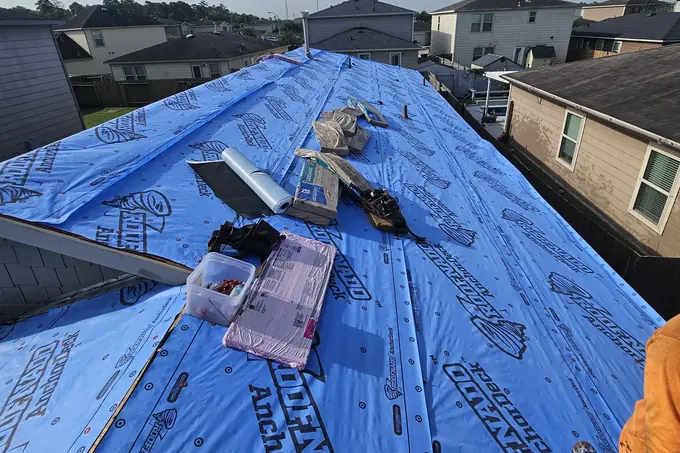
A product name for the visible shingles is useful but incomplete. Ask which supporting materials and roof details belong to the proposed scope. Depending on the project, questions may concern underlayment, starter shingles, ridge caps, edge details, vents and flashing. Have the contractor identify what is new, what remains and why.
Manufacturer technical guidance illustrates why those distinctions matter. GAF’s storm-repair bulletin discusses disturbed shingle bonds and compatible repair details. Its flashing guidance addresses the connection at roof-to-wall transitions. These details should be explained for the installed roof and selected products; they are not a reason for a homeowner to prescribe an installation from a general checklist.
Ask how existing details will be assessed
If flashing is to remain, ask what condition supports reuse and how the new work integrates with it. If it is to be replaced, ask which interface is included. “All necessary flashing” can sound reassuring while leaving two proposals difficult to compare. A clear component description is more useful than a broad adjective.
Read the concealed-damage and change-order terms
A roofing proposal may be based on materials that can be observed before work opens the assembly. Ask what happens if the contractor discovers a condition outside that initial scope. The important comparison is the decision process: documentation, explanation, approval and any revised responsibilities.
Have each contractor explain how proposed decking work will be presented. What photographs will you receive? How will the quantity and location be described? Who must approve the change? If the contractor includes an allowance or a unit-based provision, ask how that provision will be used and documented. Do not compare a proposal that includes a defined contingency with one that says nothing about the issue as though they are identical offers.
Distinguish uncertainty from an exclusion
“Cannot be assessed until exposed” is a different statement from “not included.” Ask which one applies. A contractor may need further access to make a recommendation, while another may expressly exclude a component. Both situations need clarification, but the next action differs. One calls for an assessment plan and the other for a scope decision.
Check permits, inspections and responsibility for the address
Ask which local approvals and any applicable windstorm inspections have been considered. The response should name the actual property and project, not just state that roofing work never needs paperwork. Baytown’s published distinction between shingle-only and decking work is an example of why the precise scope matters.
Record who handles each applicable task, which owner action is needed and what completion records you should receive. If the work changes, ask who revisits that answer. An estimate should not leave a required responsibility suspended between the contractor and homeowner.
TDI recommends written bids and written agreements and warranty terms when selecting a contractor after storm damage. Use the state’s consumer guidance as a source for those purchasing safeguards, while confirming requirements for your own property and insurance circumstances.
Put competing proposals into one comparison sheet
A short comparison table helps expose missing answers. Copy each contractor's actual wording rather than filling blanks with assumptions. Mark unanswered items as questions. The purpose is to identify decisions you still need to make, not to award points for the longest estimate.
| Compare this item | Ask each contractor |
|---|---|
| Observed problem | What defect and evidence does this scope address? |
| Work area | Which slopes, sections and transitions are included? |
| Materials | Which exact products and supporting components are proposed? |
| Retained components | What remains, and how was its condition assessed? |
| Hidden conditions | How will changes be documented and approved? |
| Project responsibilities | Who handles access, waste, approvals and completion records? |
| Written terms | What warranty documents, exclusions and payment terms apply? |
Compare the returned answers before deciding which proposal best fits your priorities. A larger scope is not automatically necessary, and a smaller scope is not automatically equivalent. Ask for the reason behind the difference.
Request the actual warranty and project terms
Ask for the written terms associated with the proposed work. Clarify who is responsible for responding to a problem after completion, which document describes that obligation and which materials or work it concerns. A verbal phrase such as “fully covered” does not tell you what to retain or whom to contact.
Ask whether any manufacturer warranty is included, which product it applies to and whether any registration or eligibility condition needs attention. Do not infer a provider's manufacturer status from a shingle logo, a sample board or a warranty name. The contractor should identify the offered terms for this project.
Include the practical working arrangements
Before accepting a proposal, clarify access, protection, waste handling, cleanup and the person who can approve a change. These arrangements may not settle the technical repair choice, but they affect whether the written project matches your household's needs. If an answer matters to your decision, ask that it be reflected in the agreement.
Get the missing explanation before choosing the repair
A comparison is ready for a decision when you can explain the scope difference in plain language. For example, one option may repair a defined entry detail while another proposes replacing a broader covering because surrounding condition limits a localized repair. You should understand the inspection evidence behind that distinction.
If you are still comparing guesses about the source of a leak, begin with a roof inspection through SureClaim Roofing. If replacement is already supported by the assessment, discuss the residential replacement scope and ask for its component and responsibility details. You do not need to choose a material package just to make an enquiry.
Baytown Quality Roofing is an independent referral website. SureClaim assesses the property, provides the roofing proposal and confirms its own terms. No price, project duration or warranty outcome is promised by this comparison guide.
BEFORE YOU DECIDE
Answered Questions
Is the lowest roofing estimate always the best comparison point?
Compare equivalent scopes first. A lower total may describe less work, different materials or different exclusions. Ask what explains the difference before deciding.
What if one contractor recommends repair and another replacement?
Ask each to explain the observed condition, the repair boundary and the evidence supporting that recommendation. A second opinion is most useful when it addresses the same property and symptoms.
Should damaged decking be included in the original estimate?
Ask how known decking work is described and how additional concealed conditions will be documented and approved. Do not assume every proposal includes the same contingency.
Does a shingle brand identify the contractor’s warranty?
No. Request the exact written terms for the products and workmanship being offered, including who is responsible and any applicable conditions.
A CLEAR NEXT STEP
Tell us what’s happening with your roof.
Request a no-obligation inspection from SureClaim. They’ll confirm the scope, options and availability with you.